Squaremaze: The Structural Backbone of Future Interfaces
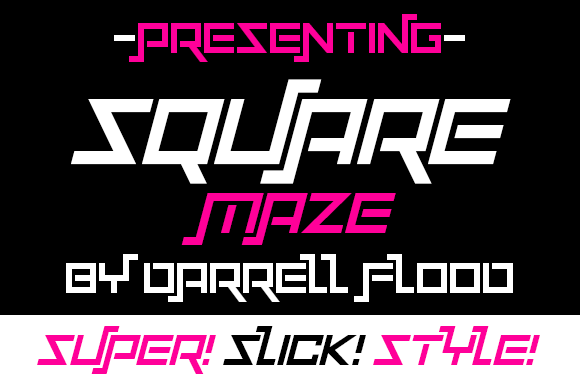
In the rapidly evolving landscape of digital design and computational geometry, few concepts have captured the imagination of creators and engineers quite like Squaremaze. While traditional grid systems rely on rigid uniformity or organic fluidity, Squaremaze introduces a sophisticated synthesis of both. It is not merely a layout technique; it is a navigational philosophy designed for environments where information density meets aesthetic precision. This article explores the mechanics, applications, and transformative potential of Squaremaze across diverse sectors, from high-tech presentations to immersive alien world simulations.
The Geometry of Innovation
At its core, Squaremaze represents a departure from the standard Cartesian grid. Imagine a labyrinth constructed entirely of right angles, yet dynamic enough to shift based on user interaction or data flow. This architecture creates a visual rhythm that feels inherently futuristic. The sharp lines and distinct boundaries provide a sense of order, while the interlocking nature of the maze structure allows for non-linear exploration.
For professionals working in UI/UX design, this geometric approach solves a critical problem: how to present complex data without overwhelming the viewer. By compartmentalizing information into distinct "rooms" within the square grid, designers can guide the eye through a logical path. The Squaremaze style ensures that every pixel serves a purpose, eliminating the white space that often plagues modern minimalist designs while avoiding the clutter of chaotic layouts.
This structural integrity is particularly valuable when dealing with large datasets. In a business intelligence context, a dashboard built on Squaremaze principles allows stakeholders to drill down from macro trends to micro details without losing their spatial orientation. The sharp, futuristic aesthetic signals competence and precision, traits that are essential when presenting to investors or technical teams.
Applications in Sci-Fi and Immersive Storytelling
One of the most compelling use cases for Squaremaze lies in the realm of science fiction and virtual reality. When an author or game designer seeks to depict an alien world or a dystopian future, the environment itself must tell a story. A cityscape built on the principles of Squaremaze offers a unique narrative voice. It suggests a civilization that values efficiency, logic, and perhaps a cold, calculated perfection.
- Alien Architectures: Imagine a colony on Mars or a station orbiting Jupiter. Using Squaremaze aesthetics, the buildings would appear as towering monoliths connected by sleek, angular bridges. The sharp edges reflect light in ways that create a harsh, dramatic atmosphere, perfect for tension-building scenes.
- Tech Presentations: For tech conferences, slides formatted with Squaremaze grids can make a presentation feel like a holographic interface. The transitions between slides can mimic the movement through a maze, creating a seamless flow of information that keeps the audience engaged.
- Digital Art: Creators utilizing generative art tools find Squaremaze to be a fertile ground for experimentation. The algorithmic generation of paths within a square grid produces intricate patterns that look both ancient and hyper-modern simultaneously.
The versatility of this style allows it to adapt to various thematic needs. Whether depicting a utopian society of pure logic or a decaying cyberpunk metropolis, the underlying geometry remains consistent, providing a familiar anchor amidst the chaos of the narrative.
Workflow Integration for Educators and Researchers
Beyond entertainment and commercial design, Squaremaze holds significant promise for education and research. In academic settings, the ability to visualize complex relationships is paramount. Traditional diagrams often fail to capture the multidimensional nature of scientific theories or historical timelines. A Squaremaze-based visualization tool could allow researchers to map out these connections in a way that is both intuitive and visually striking.
Consider a biology professor explaining the neural pathways of the human brain. Instead of a static 2D chart, a Squaremaze model could represent neurons as nodes within a grid, with synaptic connections forming the walls of the maze. As students navigate the digital environment, they physically move through the data, reinforcing their understanding of the material. This active learning approach leverages the spatial memory capabilities of the brain, making retention higher than passive reading.
Similarly, for historians analyzing geopolitical shifts, a Squaremaze timeline could offer a granular view of cause and effect. Each era becomes a "room" in the maze, accessible only after mastering the previous one. This gamification of history does not trivialize the subject matter; rather, it provides a structured framework for understanding the complexity of human events.
The Cognitive Benefits of Angular Design
Why do we respond so positively to sharp, angular designs? Psychological studies suggest that straight lines and right angles evoke feelings of stability and trust. In a world dominated by soft curves and rounded corners, the introduction of Squaremaze elements creates a focal point of intensity. This contrast draws attention to critical information, ensuring that key messages are not lost in the noise.
Furthermore, the predictability of the square grid reduces cognitive load. Users know what to expect from the layout, which allows them to focus their mental energy on processing the content rather than deciphering the interface. This is a crucial advantage for professionals who need to work quickly and accurately under pressure.
Implementation Strategies for Business Owners
For business owners looking to differentiate their brand, adopting a Squaremaze-inspired aesthetic can be a powerful strategic move. It signals that the company is forward-thinking, technically proficient, and unafraid to break conventions. However, implementation requires careful planning to ensure that the style enhances usability rather than hindering it.
- Define the Grid System: Start by establishing a robust grid. Unlike flexible flexbox layouts, a Squaremaze system relies on strict alignment. Use CSS frameworks that support custom grid templates to maintain consistency across all devices.
- Optimize for Responsiveness: A major challenge with angular designs is scaling. On mobile devices, the sharp corners can sometimes feel cramped. Solutions involve adaptive padding and reconfiguring the maze paths dynamically based on screen size.
- Color and Contrast: To achieve the futuristic look, utilize high-contrast color palettes. Neon accents against deep blacks or metallic silvers work exceptionally well. Ensure that text remains legible, adhering to accessibility standards even within a bold stylistic framework.
- Micro-interactions: Bring the Squaremaze to life with subtle animations. Hover effects that highlight specific sections of the grid or transitions that slide panels into place can reinforce the feeling of navigating a living structure.
By integrating these strategies, businesses can create digital experiences that are not only visually stunning but also functionally superior. The Squaremaze approach encourages a level of detail-oriented thinking that permeates the entire user journey, from the landing page to the checkout process.
Challenges and Considerations
While the advantages of Squaremaze are numerous, it is not without its challenges. The rigidity of the design can sometimes feel restrictive if not handled with care. Designers must avoid creating interfaces that feel too sterile or clinical. The human element must be preserved, ensuring that the technology serves the user rather than dominating the experience.
Another consideration is the development time. Building a custom Squaremaze layout often requires more coding effort than using pre-made templates. Developers need to be skilled in advanced CSS and potentially JavaScript libraries to handle the dynamic aspects of the maze. However, the investment in custom code pays dividends in terms of uniqueness and performance.
There is also the risk of overuse. If every element on a page is a sharp angle, the design can become fatiguing. Balance is key. Incorporating organic shapes or soft textures in moderation can soften the edges and make the overall composition more inviting.
The Future of Spatial Computing
As we move towards the era of spatial computing and augmented reality, the principles of Squaremaze will likely become even more relevant. In 3D environments, the concept of a "maze" translates naturally to navigation spaces. Virtual assistants and AI agents may use Squaremaze-like structures to organize knowledge graphs, presenting information in a way that mimics physical exploration.
The intersection of artificial intelligence and geometric design opens up new possibilities. Imagine an AI that generates a unique Squaremaze layout for each user based on their browsing habits and preferences. This personalized navigation system would make information retrieval faster and more enjoyable, effectively turning the internet into a vast, customizable labyrinth.
Researchers are already exploring how different geometric patterns affect human perception in VR. Early results suggest that the clear, defined paths of a Squaremaze reduce motion sickness and disorientation compared to more abstract environments. This makes it an ideal candidate for training simulations, medical procedures, and remote collaboration tools.
Conclusion: Embracing the Structure
Squaremaze represents more than just a trend; it is a fundamental shift in how we think about digital space. It combines the rigor of mathematics with the creativity of art, offering a versatile toolkit for anyone looking to push the boundaries of design. Whether you are a sci-fi writer crafting a new universe, a developer building the next generation of apps, or an educator seeking better ways to teach complex subjects, the principles of Squaremaze provide a solid foundation.
By embracing the sharp, futuristic style of Squaremaze, we acknowledge the importance of structure in a chaotic world. We recognize that clarity comes from definition, and beauty can be found in the intersection of lines. As we continue to explore the digital frontier, let us carry the lessons of the maze with us, using them to build paths that lead to discovery, understanding, and innovation.
The journey through the Squaremaze is just beginning. With each step, we uncover new layers of possibility, proving that even in the most rigid of structures, there is room for infinite variation and endless creativity.