Beyond the Grid: Why Munk is Defining the New Era of Digital Typography
In a digital landscape saturated with sterile sans-serifs and predictable serif pairings, creators and entrepreneurs are increasingly seeking a visual language that cuts through the noise. We are witnessing a significant shift in how brands communicate their identity online. The era of uniformity is giving way to personality-driven design. At the forefront of this movement stands Munk, a unique and interesting display font that challenges conventional norms while offering a versatile toolkit for modern storytelling.
For professionals who understand that typography is not merely about readability but about setting an emotional tone, Munk represents more than just a typeface; it is a strategic asset. This article explores why this quirky font is capturing the attention of marketers, freelancers, and tech enthusiasts alike, and how it aligns with the evolving needs of the creative industry.
The Rise of Personality-Driven Design
To understand the relevance of Munk, one must first look at the broader context of web design and branding trends. For the past decade, the dominant aesthetic has been minimalism characterized by clean lines, neutral palettes, and highly legible, functional fonts like Inter or Roboto. While effective for usability, this approach often results in a homogenized internet where brands struggle to differentiate themselves visually.
However, consumer preferences are shifting. Audiences are craving authenticity and human connection. In response, designers are moving away from the "safe" grid systems toward expressions of character. This is where display fonts become critical. They serve as the headline act, drawing the eye and establishing a mood before a single word of body copy is read.
Munk fits perfectly into this paradigm shift. It is designed to be bold and distinct without sacrificing the structural integrity required for professional applications. By embracing its quirks, brands can signal creativity and confidence. This trend is particularly evident in the startup ecosystem, where founders need to project innovation rather than corporate rigidity. A website using Munk immediately signals that the company behind it values individuality and is willing to take calculated risks.
Understanding the Munk Aesthetic
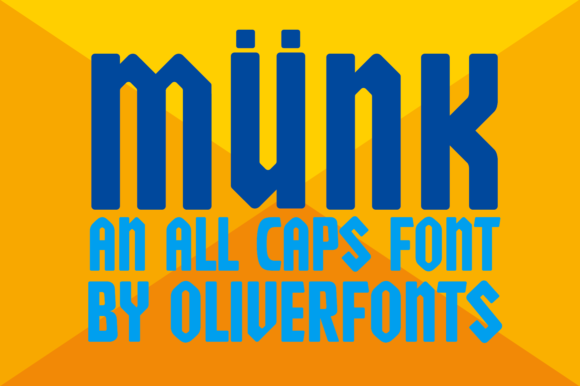
What exactly makes Munk stand out? Unlike standard geometric sans-serifs that rely on mathematical precision, Munk introduces organic irregularities and playful distortions. These subtle variations mimic the hand-drawn feel of custom illustration, bridging the gap between digital efficiency and analog warmth.
This characteristic is not merely decorative; it serves a functional purpose in user engagement. When a visitor lands on a page featuring Munk, the slight deviation from the norm triggers a psychological response known as the "novelty effect." The brain pays closer attention to stimuli that differ from the expected pattern. For freelancers and content creators, this means higher retention rates and longer time-on-page metrics, which are crucial for SEO and conversion optimization.
The font's versatility allows it to adapt to various contexts. Whether used for a high-energy tech launch, a boutique lifestyle brand, or a creative agency portfolio, Munk maintains its integrity. It does not force a specific genre upon the user but rather amplifies the existing voice of the brand. This flexibility is why it has become a favorite among marketers looking to refresh their visual identity without undergoing a complete rebranding overhaul.
Adapting to Changing Workflows and Expectations
The adoption of specialized fonts like Munk is also driven by changes in design workflows and technology. As tools like Figma, Webflow, and Tailwind CSS democratize design, the barrier to entry for creating sophisticated layouts has lowered. However, this accessibility has led to a paradox: while everyone can build a site, few know how to make it memorable.
This is where the strategic application of typography becomes a competitive advantage. Professionals are no longer satisfied with default system fonts. They are curating type families that tell a story. Munk addresses the need for a font that is both expressive and technically robust. It is engineered to perform well across different screen resolutions and devices, ensuring that its unique characteristics remain intact whether viewed on a mobile phone or a large desktop monitor.
Furthermore, the rise of micro-interactions and dynamic content has changed how text is consumed. Users often scan pages rather than reading them linearly. A display font like Munk acts as a visual anchor, guiding the user's eye through the hierarchy of information. Its distinctive shapes create natural stopping points, breaking up walls of text and making complex information more digestible.
For entrepreneurs launching new products, this is invaluable. In a crowded marketplace, the first impression is often the only one you get. Using a font that conveys energy and uniqueness can be the deciding factor between a user scrolling past and a user engaging with the content. Munk provides that initial spark, inviting the audience to explore further.
Practical Applications in Modern Business
The utility of Munk extends beyond mere aesthetics; it solves real-world communication problems. Consider the following scenarios where this font excels:
- Landing Pages for Startups: A SaaS company launching a disruptive tool can use Munk for headlines to convey agility and innovation. The quirky nature of the letters suggests a product that is thinking outside the box.
- E-commerce and Lifestyle Brands: Fashion retailers and artisanal food producers often struggle to balance professionalism with approachability. Munk offers a solution that feels curated and hand-picked, enhancing the perceived value of the product.
- Personal Portfolios: For designers and developers, a portfolio is a statement piece. Using Munk demonstrates a keen eye for detail and a willingness to embrace non-traditional solutions, traits highly valued by potential clients and employers.
- Event Marketing: Concert posters, conference materials, and social media campaigns benefit from the immediate impact of Munk. Its ability to command attention in small spaces or on busy feeds makes it ideal for promotional materials.
In each of these cases, the font is not just a stylistic choice but a strategic decision aligned with business goals. It helps brands articulate their values and connect with their target audience on a deeper level.
Looking Ahead: The Future of Type in a Digital World
As we move forward, the intersection of technology and creativity will continue to evolve. Artificial intelligence is beginning to generate designs, yet there remains a profound human desire for imperfection and character. Algorithms can optimize for efficiency, but they cannot replicate the soulful nuance of a well-crafted typeface.
Munk represents a counter-movement to algorithmic uniformity. It reminds us that even in a highly digitized world, human expression matters. The growing interest in such fonts reflects a collective yearning for content that feels authentic and grounded. As businesses compete for attention, those that invest in unique typographic identities will likely see greater returns in brand loyalty and customer engagement.
For the creative community, the message is clear: do not be afraid to experiment. The rules of design are constantly being rewritten, and the most successful practitioners are those who adapt quickly. By incorporating fonts like Munk into your workflow, you are not just choosing a style; you are participating in a broader cultural shift towards more expressive and meaningful digital experiences.
In conclusion, Munk is more than just a font; it is a tool for differentiation in an increasingly noisy world. Its quirky charm, combined with its professional reliability, makes it an essential addition to the arsenal of any modern creator. Whether you are building a website, designing a marketing campaign, or crafting a personal brand, Munk offers the perfect blend of character and function. Embrace the opportunity to let your work speak with a unique voice, and watch as your audience responds to the genuine connection you establish.
By understanding the context in which Munk thrives, professionals can leverage its power to elevate their projects. The future of design belongs to those who dare to be different, and with Munk, the path to standing out has never been clearer.